NYT Crossword: How the Daily Puzzle Works (And Why Monday Isn’t Like Saturday)
Before Wordle, before Connections, there was just The Crossword — the New York Times’ flagship daily puzzle, running since 1942. It’s a different animal from the Mini Crossword: bigger, slower, and built around a weekly difficulty curve that rewards regular solvers.
What Is The NYT Crossword?
The Crossword is the Times’ full-size daily grid: 15×15 squares Monday through Saturday, stepping up to a larger 21×21 grid on Sunday. Unlike the quick, five-minute Mini, this is the puzzle built for a longer sit-down session, with clue lists that can stretch into the dozens across and down.
How the Week Is Structured
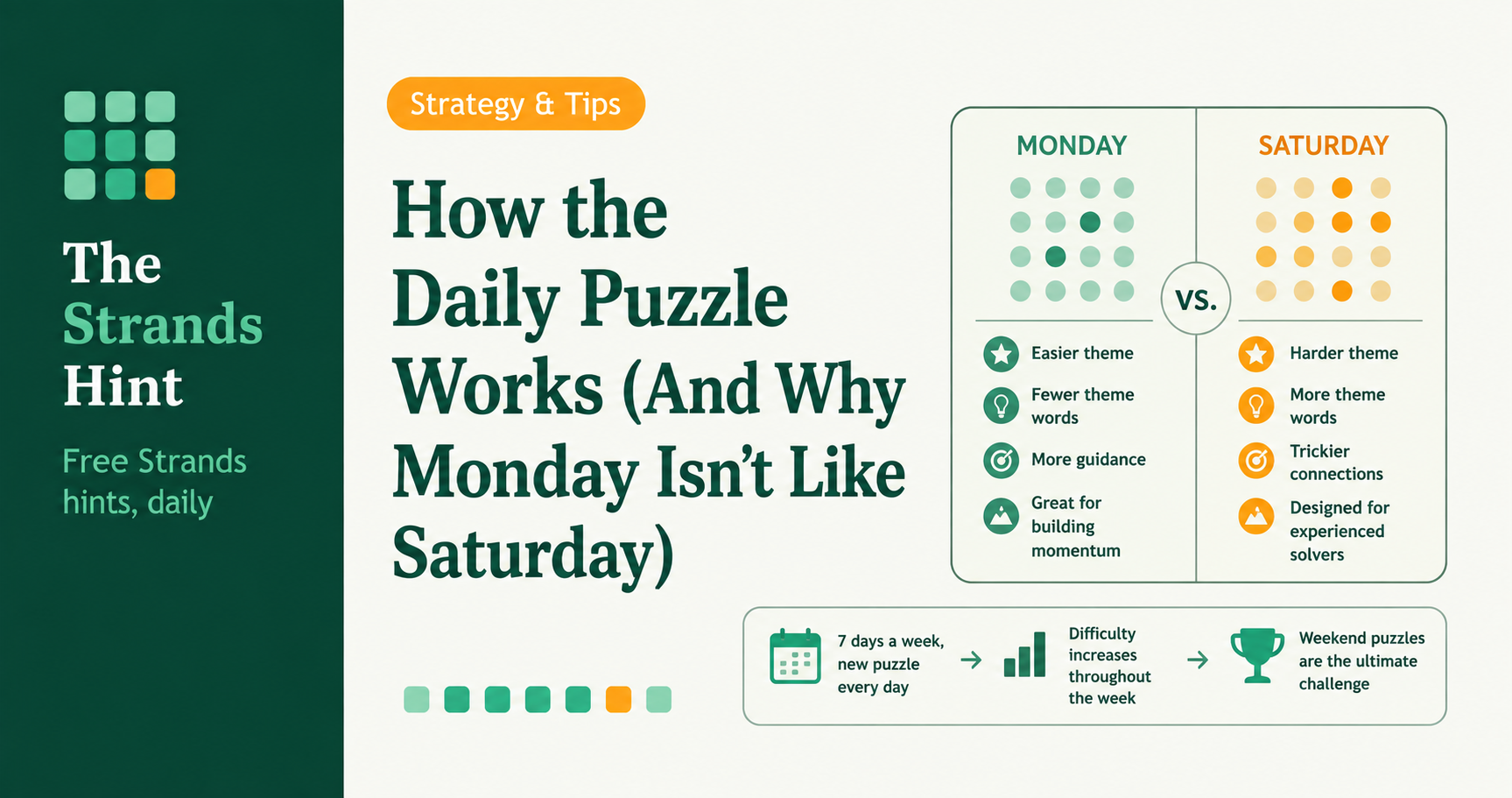
One of the most useful things to understand about The Crossword is that difficulty isn’t random — it follows a weekly curve.
- Monday to Wednesday: Usually themed, with several longer answers tied together by a common idea, sometimes with a ‘revealer’ clue that explains the connection
- Thursday: Still themed, but often includes a twist — rebus squares where one box holds multiple letters, or unconventional grid rules
- Friday and Saturday: Usually themeless, leaning on clever wordplay and a wider vocabulary instead of a unifying idea, which makes them the toughest of the week
- Sunday: The largest grid, always themed and titled, but generally closer to Thursday-level difficulty despite its size
How to Play
Across clues are numbered left to right, and Down clues are numbered top to bottom. Each numbered square marks the start of one or more answers, and letters you fill in for an Across answer often double as letters for a crossing Down answer, so a confirmed answer in one direction can unlock several answers in the other.
Strategies for Solving Faster
Start With Monday-Level Confidence, Even on Harder Days
Whatever day it is, scan for the clues you’re most sure about first — fill-in-the-blank clues, straightforward definitions, and pop culture references. These give you letters to work with before you tackle the trickier entries.
Use Crossing Letters as Clues Within Clues
Once a few answers are locked in, use the letters they reveal to narrow down crossing entries you were unsure about, the same crossing-letter logic that makes Connections groupings easier to confirm once a few categories click into place.
Expect Wordplay on Friday and Saturday
Themeless days lean heavily on puns, double meanings, and misdirection in the clue wording. If a clue feels oddly phrased, it’s often a sign to read it differently than your first instinct.
Watch for Rebus Squares on Thursday
If your answers seem one letter too short or too long for the grid, check whether a single square is meant to hold more than one letter or symbol — a common Thursday trick.
Common Mistakes to Avoid
- Assuming every day plays like Monday and getting stuck expecting easy, literal clues
- Ignoring crossing letters that could confirm or rule out a guess
- Overlooking the puzzle’s title on Sunday, which often hints at the theme
- Giving up on themeless days instead of re-reading tricky clues for wordplay
Quick FAQ
Is The Crossword the same as the Mini?
No, the Mini is a small 5×5 grid meant for a quick daily solve, while The Crossword is the larger, longer-running daily puzzle with a full 15×15 (or 21×21 on Sunday) grid.
Do I need a subscription to play?
NYT Games puzzles like The Crossword are part of the Times’ games subscription, unlike free daily games such as Wordle.
Why does the puzzle get harder through the week?
It’s an intentional editorial structure, meant to give beginners an easy entry point on Monday while still challenging experienced solvers by the weekend.
Final Thoughts
The Crossword rewards solvers who understand its weekly rhythm. Lean on easy clues first, use crossing letters to confirm the tricky ones, and adjust your expectations as the week gets harder — by Saturday, you’re solving a completely different kind of puzzle than the one you started with on Monday.